RESONANCE
A SHORT STORY BY YI HSIAO
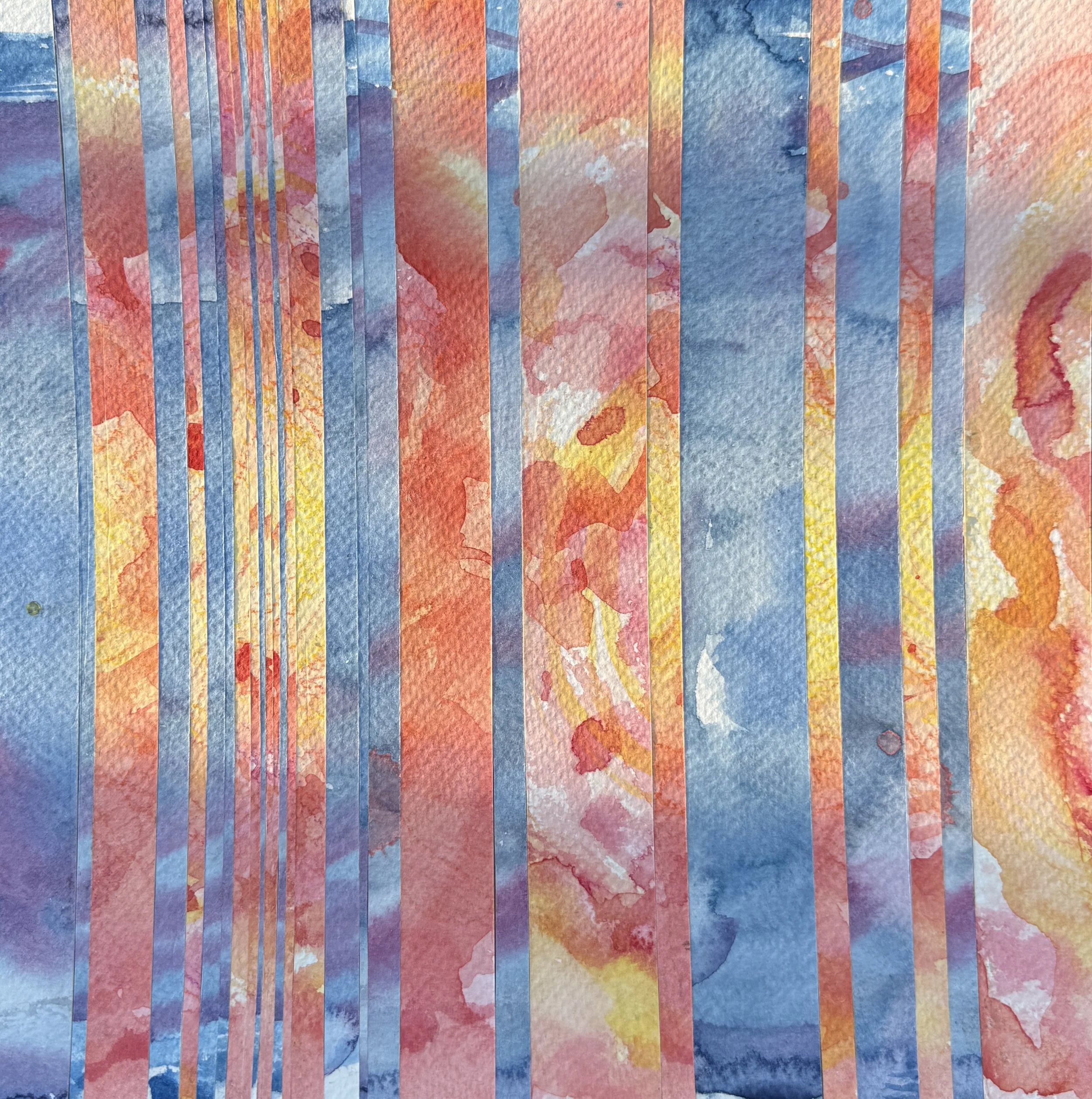
Art by Kelley-Marie Van Dilla
Translator’s Note
When I asked Yi Hsiao what inspired her to write “Quietly,” she said that, while riding her bike one day, she came across a sign with the words: “Chu Hsueh-Chang beats Wu Pei-Hua every day.” The author of that flyer, and their intentions, remain unknown. However, news reports reveal that a local politician named Chu Hsueh-Chang (no longer in office) was investigated for assaulting his wife, among other items on his extensive criminal record.
In my research, I learned that the man who inspired this story once represented a neighborhood adjacent to mine. This only intensified a striking feature of the text: its ordinariness, the sense that this couple could be anyone’s next door neighbors. The protagonist’s thoughts and actions are both outrageously perverse and totally unremarkable. After beating his wife, he visits the convenience store. He buys a drink and eats biscuits while mulling over his relationship and rationalizing his explosive anger. He could be any man, sitting next to me, on any random night at a 7-Eleven.
The coolness with which Yi Hsiao transmits this shudder-inducing knowledge is reflected in the metallic quality of her language. Bitterness infuses the atmosphere, which is full of hard surfaces: a tin can, eggshells cracked on a tabletop, asphalt, tiled floors clanging with the impact of a woman’s head. I chose “Quietly” as the title in order to maintain an emphasis on sound (and its absence) but the original title “悄悄” also invokes a sense of action done in secret, stealthily or sneakily. The protagonist moves silently, maintaining a smooth exterior, while the simmering impulse to violence creeps up, hiding in plain sight.
While this story captures a relatively short moment in the psychic life of an abusive man, the sounds and sensations of his violent actions, the period of rest that follows, and the repeated building up of tension, stayed with me for a long time. Many of the scenes and images presented here are specific to urban Taiwan—the convenience store snacks, the neighborhood noodle shop—but the theme of misogynistic violence, its banality and its rationalization, is one that could resonate with readers worldwide.
—Cheryl Schmitz
ONE SHORT STORY
Translated from Chinese by Cheryl Schmitz
Quietly
Chu Hsueh-Chang beat Wu Pei-Hua every day.
He beat her with his hands. Blow by blow, as the flesh bounced back into his palm, it was as if his mind were splitting—he didn’t know whether he felt rage or ecstasy. He struck her body, her head, her face. When he’d tired himself out, he stopped. He gazed vacantly at his hands, palms reddened, the fingers as if pricked by needles.
Wu Pei-Hua was just that way: she didn’t make a sound. He hated when she was like that. Her silence was a stinging taunt, a mute resistance. So he had to hit her again, hit her until every part of her had been beaten. She fell limply to the floor. He watched, listening to the sound of his shortened breath. Annoyed and fed-up, he kicked sideways at her body as he walked out of the room. He took some cash from her bag and left.
His hair was a mess, his eyes red and teary like someone who’d just vomited. It was hard not to attract attention. The convenience store clerk shot him a curious look. He glared back, but he didn’t feel like hitting anyone. That burst of energy had already passed. Now, he was the calmest person in the world. Serenely, he sat down with his drink, wiped the table, then went to discard his crumpled ball of tissue paper.
He raised his can and took a sip, then another. It was both refreshing and cooling. Thoughts began to enter his mind. He wished they could get along, just like other people do, take some happy little vacations to places like Tainan or Yilan. He would be good to her, he would.
He didn’t like those little moods of hers. He wished she could let them go. They really didn’t do her any good. He didn’t like her being unhappy. Every time she started to frown or get irritated, he could see her unhappiness amassing like black clouds. It pulled him into a state of unbearable tension. He didn’t understand why she couldn’t comprehend any of this. She was like a child. So he had to teach her: a bad mood will only provoke another bad mood; iron must be tempered by fire to make steel.
He was hungry. He got some biscuits, then took a plastic bag. With tongs, he extracted a tea egg from the broth—one, then another. Silent and scalding, they sank to the bottom of the bag, like anger with no outlet. Head held high, he strode over to the counter. It was the same clerk from before, who didn’t especially notice him anymore. He was of sound body and mind, and the world was full of possibilities.
Good thing he hadn’t said anything nasty just now—he was glad. That could be really harmful to a relationship. Harsh words were like acid; they corroded the bond. As for his physical actions, they felt to him like an afternoon thunderstorm on a summer’s day: that kind of release left one soaked, but it was unavoidable. It was something he couldn’t control. After the rain, the sun shone brightly again. The dusty-gray roads were transformed into spotless surfaces. That kind of thorough wringing-out left him feeling clean, as if the world had been destroyed, and everything could start over again.
He ate one of the eggs. Before leaving, he thought, he’d buy her noodles at the entrance to the alley. The shop owner strained the noodles, forcefully flinging them a few times. The soup should be packed separately, don’t add chives. He remembered these little quirks of hers; they were annoying, but he remembered. Wasn’t that good enough? He got irritated again thinking of it, his chest felt tight, as if crammed with padding. Why couldn’t she remember any of the good parts? She was always provoking him.
He walked quietly up the stairs, noticed the metal gate had been left open. He went in. She wasn’t there. The house was messy. He could tell which parts of the mess were new—in the closet and the bathroom, there was the mess of things being grabbed in a hurry. He paced around a few times, called her phone. No answer. The next time he called, her phone had been turned off.
He calmly sat down. In silence, he looked at the floor. It had originally been tile, which she’d disliked because it was cold and hard. Change it to wood then, he’d said. They’d fought again—he remembered that time he’d been especially brutal. He’d grabbed her head and shoved it at the floor. The sound of the impact rang in his ears, such that it didn’t even seem like something that could come from a human. It was like a mallet, or maybe a jackhammer. After that, she didn’t come home for a long time. For a while, whenever she looked at him, her face was that of a stranger, her body shrunken in fear. He hated that.
He kept waiting. In his pocket, he felt for the bag with the egg. He knocked the plastic-encased egg on the table. Its shell cracked. He continued to knock until it shattered into clumps of tiny shards. He felt his fingers pierce through the bag, penetrating the eggshell and the cold, hardened egg white, pinching the egg yolk into a powder. He pinched until the whole bag had been squeezed into a lump, the bag and the egg melded into a single mass, no longer recognizable.
He hoped she’d come back soon. She’d better come back soon. He sat there, like steaming water.
ONE SHORT STORY
By Yi Hsiao
悄悄
朱雪樟每天都毆打吳佩樺。
他用手打,一下是一下,手掌傳來肉的反彈,心裡像要裂了一樣,不知道是狂怒或喜極。他打在她身上,頭上,臉上,打得累了,自己也停下,茫然地看著手,手掌都紅了,手指頭像針刺一樣。
吳佩樺也就那樣,不聲不響,他就恨她那樣。她的不聲響就是個帶刺的嘲諷,無聲的反抗,因此他還要再打,打得全身都打遍了,她軟倒在地下,他看著,聽到自己短促的呼吸聲,覺得煩和膩,往她身側踢一下,便走出房間,從她包裡拿了幾百塊,開門出去了。
他蓬著頭,眼發紅,眼裡都是眼淚,像剛嘔吐過的人,難免不引起別人的注意。這個超商店員很稀奇地看他一眼。他回看,倒是不想打人,他那股勁已經過了,現在是世界上最平靜的人。他心平氣和地拿飲料坐下,把桌子揩乾淨,又站起身子拿紙團去丟掉。
他拿起罐子,喝了一口,兩口,覺得很清爽,又清涼。他心裡開始有一些想法,他希望他們能好好的,像別人那樣,去台南或宜蘭之類的地方,做一些愉快的小旅行,他會對她好的,他會的。
他不喜歡她那些小情緒,他希望她可以戒掉它們,真的那對她沒有好處,他不喜歡她不開心。每次她一皺眉或煩躁起來,他就輕易地看到烏雲般聚攏來的不愉快,那像勾子一樣,讓他特別緊繃。他不明白她為什麼不懂這點,她像個孩子一樣。他只好教她,不好的情緒只會喚出不好的情緒,鐵用火去煉才會變成鋼。
他覺得餓,站起來去拿了餅乾,又走過去拿了塑膠袋,用夾子從茶湯中夾出蛋來,一個,再一個,它們無聲而滾燙墜落袋子底端,像無路可出的怒意。他昂首闊步走至櫃台,還是剛才的店員,已經不再注意他。他感覺天高地闊,身體好用。
還好他剛才沒有說出難聽的話,他很慶幸。那對關係很傷,惡語像酸,會侵蝕一段關係,至於肢體,他感到,就像夏日午後的暴雨,那種宣洩會讓人濕透,但是不能避免。他拿那個沒辦法。雨下了之後又是豔陽高照,灰透的路面變得什麼都不剩,那種完全的乾燥讓他覺得很清潔,像世界毀滅,一切重來。
他吃了蛋一顆,走之前想到,到了巷口去幫她買了麵。老闆把湯瀝乾,用力氣甩幾下,湯要分開裝,韭菜不要加。他就記得她的那些小地方,很煩但是他記得。這不就好了嗎?他想到又煩起來,胸口像塞了棉絮,為什麼不能記得這些好?老是惹他。
他輕輕走上樓梯,看到鐵門沒關,推門進去,她不在。家裡很亂。他辨識出那些新加上的亂,衣櫥廁所裡那種匆忙拿過物品的亂。他來回走了幾次,打電話給她,她沒接,再打一次變成關機。
他靜靜坐下來,不聲不響看著室內的地板,本來是瓷磚地,她嫌冰硬,他就說那換成木板,又吵起來,他記得那次弄得很慘,他拿她的頭往地上撞,他耳裡響起那種聲響,到後來簡直不像人發出的聲音,像是槌子,或打地機之類的。那次她過很久才回到家裡,有陣子看到他,臉上很陌生,身體瑟縮。他討厭那樣。
他繼續等著,從口袋摸出裝著蛋的袋子來。隔著塑膠袋,叩叩在桌上敲碎殼,殼碎了,他仍不斷地敲,殼碎裂成密密麻麻的小塊,他感覺自己的手指穿破袋子,穿破蛋殼和冰冷僵硬的蛋白,把蛋黃也捏成粉狀。他捏著逐漸把整個袋子捏成一團,袋子和蛋融為一體,再也辨識不出。
他希望她趕快回來。她最好趕快回來。他坐著,像蒸騰的水。
-
Yi Hsiao is a writer from Taiwan. Born in Taipei in the 1980s, she completed undergraduate studies at the Art Institute of Chicago and received a master’s degree in architecture from Pratt Institute. She has studied and lived in Chicago, New York, and Hong Kong. Her work has been featured in “Chiuko’s Annual Selection of Short Stories 2018” and “Chiuko’s Annual Selection of Essays 2021.” She is the author of the short story collections A Place Called Earth and I Love the Moon, as well as the novel Malibu. She currently lives and writes in Taipei.
-
Cheryl Schmitz is a literary translator working from Mandarin Chinese to English. She is interested in literature from Taiwan, particularly by women and queer authors.
Originally from the United States, she now resides in Taipei.