Review: The Aquatics by Osvalde Lewat
Translated by Maren Baudet-Lackner
Review by Daniel Weisbrod
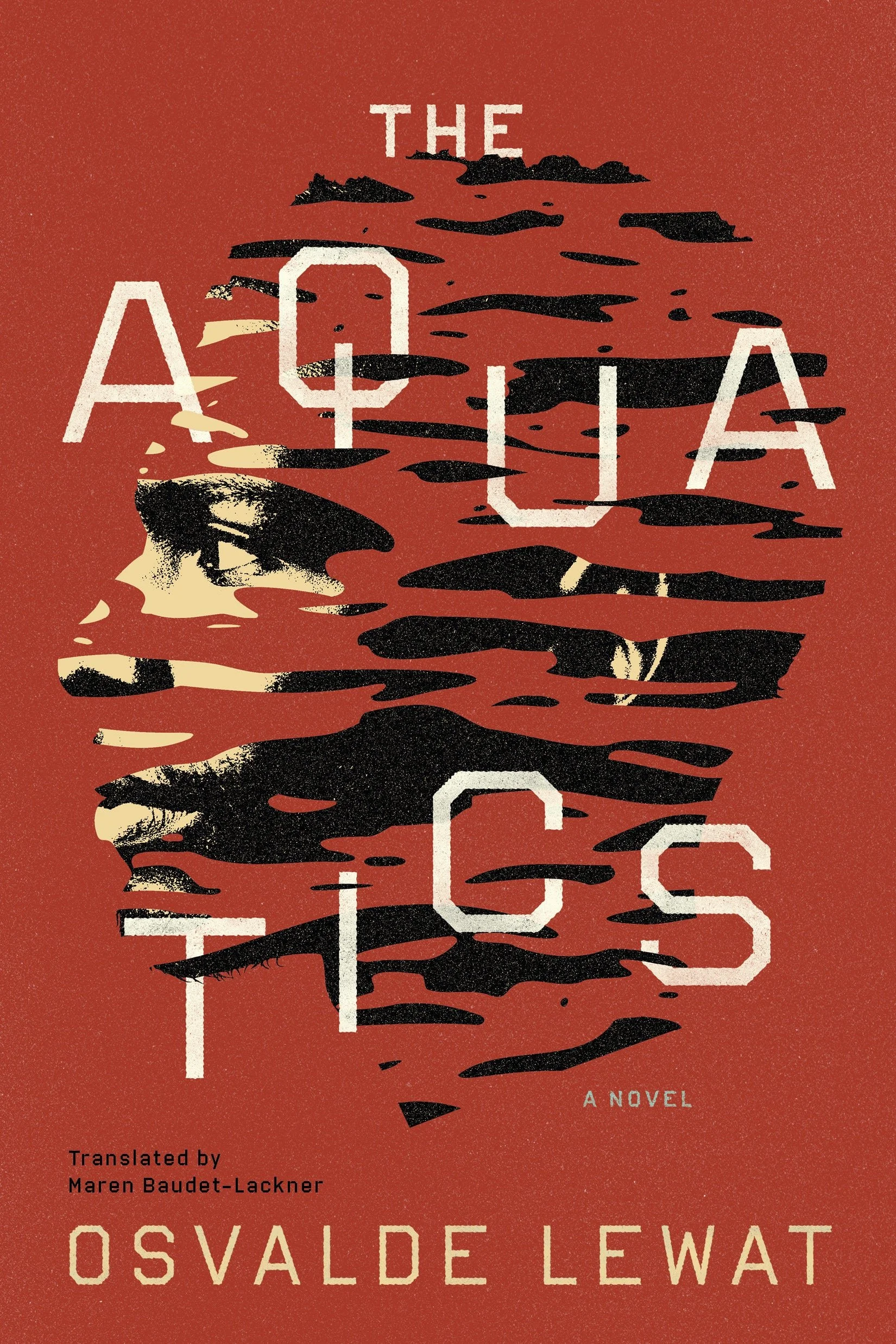
Coffee House Press, 248 pages, $18 paperback
In her debut novel The Aquatics, Osvalde Lewat explores the social and political constraints present in many African countries today, providing a cogent critique of privilege in the face of injustice. She tells the story of Katmé, who is trying to navigate her life as the wife of a public figure, as well as trying to be a good friend to Samy, a struggling artist getting ready for his breakout exhibition. Katmé is forced to confront the difficult feelings she buried with her mother when she was a teenager when her mother’s grave needs to be exhumed in order to build a highway. At the intersection of tradition, colonialism, and the desire for security, Katmé has to decide for whom she wants to live her life.
While the country of Zambuena in which this story takes place is fictional, it is set within the all too real circumstances in post-colonial Africa. Lewat uses Katmé to serve as witness to the experiences of queer people in one of the 64 countries where homosexuality is outlawed. She begins her journey in a place of complacency. She doesn’t feel particularly fulfilled in her role as Mama Prefect. She loves her daughters, she tolerates her husband, and she tries to do some good where she can. The highlight of Katmé’s life is her relationship with Samy. The two had been friends since high school, Samy was the godfather of Katmé’s daughters, and the pair confided in each other always. Katmé was worried about the political elements of Samy’s art exhibition that could get him in trouble with the state. Samy pushes back on Katmé due to her position of privilege being married to an ambitious Party member like Tashun. In a political move to attack Tashun, an article is published about Samy’s exhibition calling him a homosexual, leading to his arrest and imprisonment.
Learning of her husband’s connection to her friend’s arrest, Katmé tries to get him released. Katmé starts pushing back against Tashun’s callousness, his single-minded focus on his career as well as the box he wants Katmé to stay in to bolster his public image. Through their relationship, Lewat explores the power imbalance and the incongruous gender norms between men and women. Katmé is meant to be an asset to her husband, running his household and tending their children, but Tashun still has the final say on what she is allowed to spend his money on. He holds the threat of losing his protection over Katmé like a sword to keep her in line. Tashun is also leveraging the exhumation of Katmé’s mother as a political event to build support in his campaign to become governor with no thought of how Katmé feels about the situation. As his grip on her tightens, Katmé feels the need to escape grow.
Translated beautifully from the French by Maren Baudet-Lackner, the reader walks alongside Katmé on her emotional journey. Lewat’s prose sings through Baudet-Lackner’s translation, the stunning vignettes harken to Lewat’s successes as a film maker. Katmé’s wit and internal monologue tactfully interrogate the themes of prosecution of queer people, gender roles, and Western influence in a fictional post-colonial setting.
The presence of colonialism can be felt throughout the book like a ghost. The highway they plan to build over Katmé’s mother’s grave is being funded by a European company looking to make a foothold in the Zambuenan infrastructure market. Through her interactions with Aleksandre Forès, the representative of the highway company, Katmé engages with the complicated influence of the Western culture in her country. Baudet-Lackner, too, takes up the engagement, inviting us to witness, contemplate, and remember that we must all decide for ourselves, for whom do we want to live our lives?
-
Daniel Weisbrod is a literary translator from the French. He is pursuing his MFA in Literary Translation at the University of Iowa. He can be found sipping coffee over a book in Iowa City, or else wandering the North Woods of Minnesota. Or perhaps somewhere in between.