
Forms
The World is Ending
Demijan Vilupek translates from the Old Slavonic. Original from the Parisian Songbook.
The World is Ending
Translated from Old Slavonic by Demijan Vilupek
[fol. 198a]
The world is ending and the sun 'ready setting,
Justice wilting, love iced over, murk is spreading.
His armies the Devil is already heading,
Coming’s the day the Holy Book was propheting.
Forgotten both Christ and his servants remain,
And Babylon’s folk jeer at them with disdain.
Whenever I hear this my heart aches in pain,
For discord is sown, now comrades are atwain.
Friars and monks who the Gospel do read,
Only ought justice they serve and then heed,
Yet evil they follow that leads them to greed;
They virtue forsake.
Turning a blind eye to truth in their sin,
With limitless avarice these foul men
Incline their hearts toward anarchy’s den,
While God they renege.
Cardinals, bishops and abbots • who, having
left god, think only of gold, • Spiritual
guidance now will not provide • without a
sack of coins in their paws • They march to
the tune of Simon, the forefather of this
blight • to the many a soul crying wretched
and cursed • They pay no mind • in their
feast, their drink and their dance • oh the urge to
shout: “evildoers!” – at the evil in plain sight •
Little brothers and monks preachers • pauli
nes • carmelites the tonsured • All priest
[fol. 198b]
s nuns and all deacons • all together tu
rned like crabs • Many of them • as la
ymen • cattle would tend and dig and plou
gh • but now girdle their fattened bellies •
which they one and all serve like god • De
vilsent hypocrites swindling the world • gru
bby hands snatching all they can • and their
crimes pave the way for antichrists • whi
le folks souls vanish in the abyss • those who
would uphold gods word • and follow jesus
his son • in penance and modesty confes
s their sins • led by their fury to banish th
e evil • declare you are a phoney and
sarabaite • with that pale face and those pris
tine clothes • To the inquisitor drag him to
court • blessed be father inquisitor this man
has strayed • walks famished thirsty nude b
arefoot yet us he chides • we beg you must
condemn him • for if no laws rule here • Glory
and dignity we will lose • they will refuse
us our wage wine sweet and sea fish cooked • •
The World is Ending
From the Parisian Songbook
[fol. 198a]
S͡t’se kon’ča isl’n’ce jur’ zahodi • pr͡vda gin
e ljub’vъ s’tine • tma ishodi • d’javlъ jure
svoju vois’ku kup’no vodi • g’dase svr’ši
s͡to pis’mo d͡nъ prihodi • Is͡hъe dn͡sъ zabl
enъ inegovъ sluga • vsaki kie z’babilona
nim’se ruga • Gda to slišahъ obuemi sr’c
e tuga • ar’ neskladъ krivo gleda drug’
nadruga • Vredovnicêhъ ki čtu s͡to eđ͡e •
imêlabi pr͡vda biti isvr’šen’e • asadae o
pačenъe iprevraĉen’e • ivsakomu dobru dê
lu razoren’e • Ot istini oči svoi ukloniše •
upohotehъ sego s͡ta zabljudiše • kbeza
kon’ju sr’ce svoe prikloniše • svoimu têlu
aneb͡u ugodiše • Gr’dinali bs’kupi iop͡ti • m
isle b͡a ostaviv’še lê oz͡lti • Dh͡vna
rêčъ otnih’se nemore imêti • akoim’se pênez
i prie neplati • Simuna vtomъ naslêduju
ki to zače • k͡ko mnoga d͡ša vmukahъ pla
če • Niedanъ to neraz’miš’la • ĵê p’e skače •
gdobi rekalъ zlo činite zloga vlače •
Mala brat’ê ikolud’ri predikav’ci • reme
tani • kar’meliti kav’čenaci • Vsipopov
[fol. 198b]
e kolud’rice iv’si d’êci • vsise nazadъ o
b’ratiše k͡ko raci • Mnozi otnihъ • ki akobi v’s
vêtê stali • skot’bi pasli ikopali ioral
i • asadasu prev’tilъ tr’buhъ pod’pasal
i • komu kako b͡u služe veli imali • Lice
mêri vraži pos’li s͡tomъ hine • zl͡to sreb’r
o ič’to mogu moĉ’no plêne • an’tih͡u putъ go
tove zlo vtomъ čine • Sesu oni kêmi d͡v
mnogo gine • kibi hotêlъ b͡žiju pr͡vdu uzdr’ž
ati • inegova s͡na i͡sa slêdovati • upok
ori iubožъstvi grêhъ plakati • povele
ga svoimъ gnêvomъ zlo prog’nati • prave
tisi pokrita išar’buita • ato tomu blê
do lice iostra svita • Vlêcêtega kvi
žituru daga vspita • s͡ti oče kviži
turu ov’ti bljudi • lъč’nъ žeênъ nag’ bosъ ho
di an͡sъ sudi • prosimote dase ovъ hinacъ l
ê osmudi • akonam’se svr’hu zm͡le nepotrêbi •
Sl͡va n͡ša ipočten’e n͡mъ pogine • krate n͡mъ
dohdakъ slat’ka vina ipečene imor’ske ribe • •
The Parisian Songbook
BnF, Ms Slave 11, fol. 197v-199r
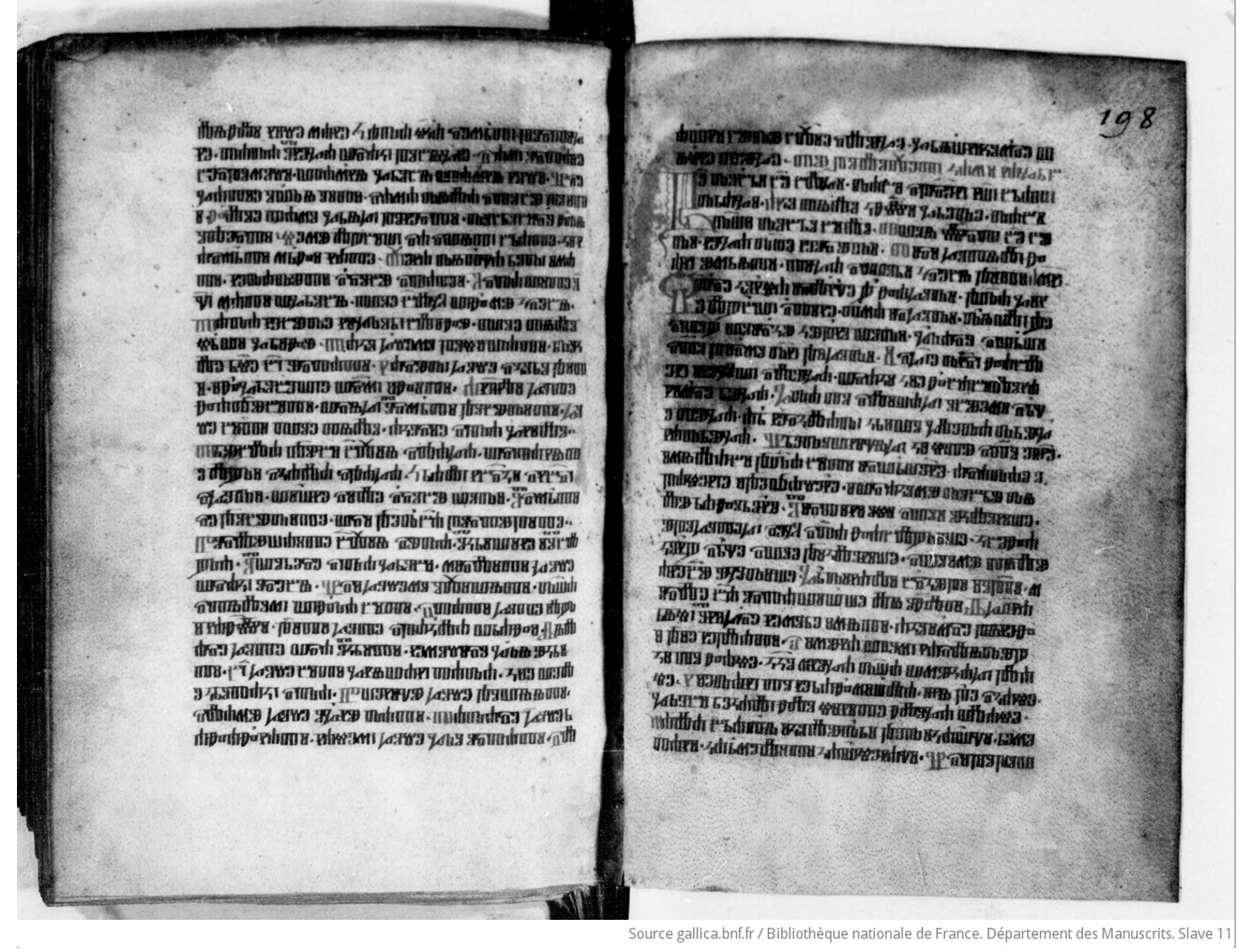
Paris, BnF, Ms Slave 11, fol. 197v-198r
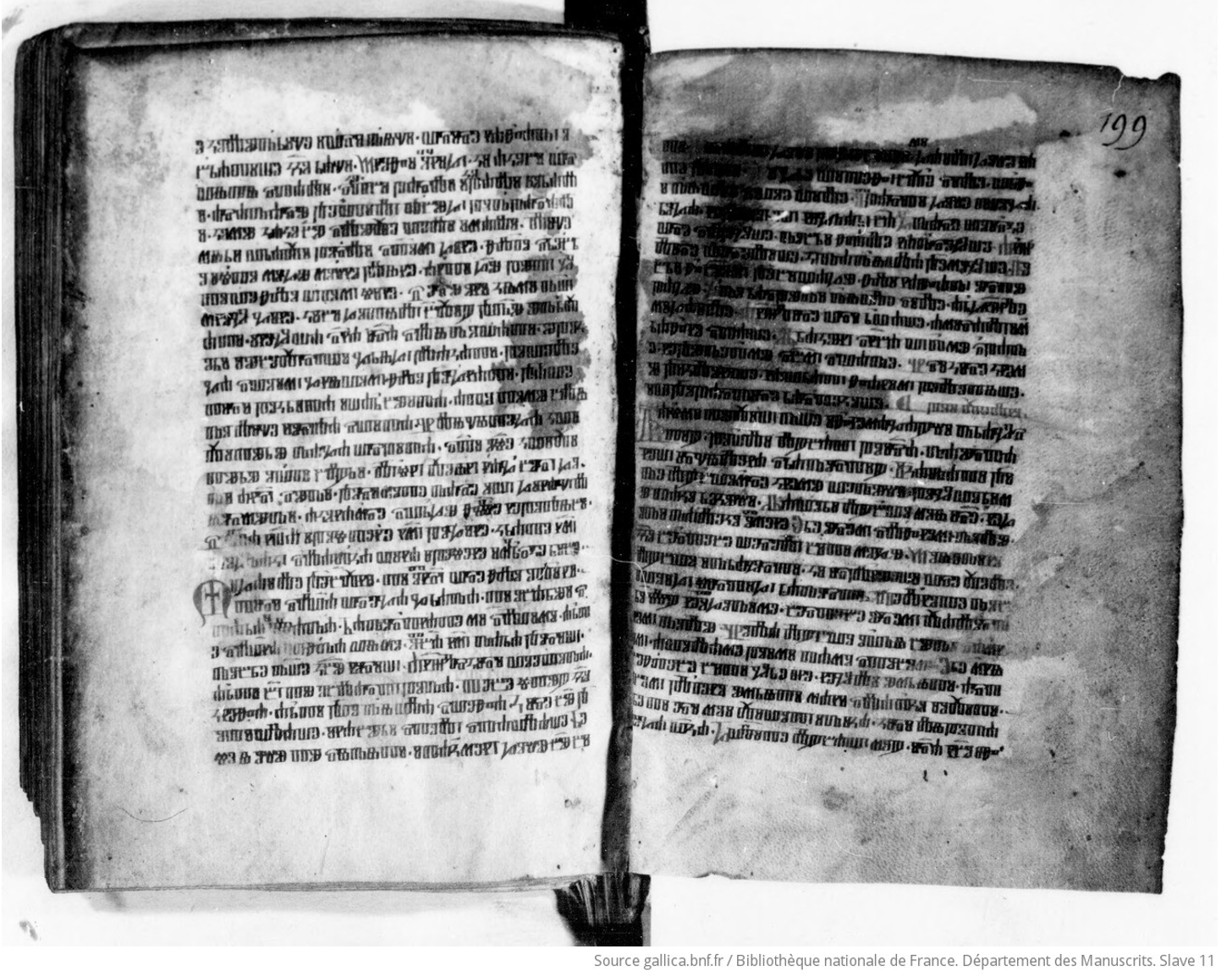
Paris, BnF, Ms Slave 11, fol. 198v-199r
Translator's Note
The World Is Ending (Svêt se konča or popularly Svit se konča) is an untitled satirical poem of uncertain origin written at the end of the Parisian Songbook, the earliest known poetic collection in the Croatian language which was rediscovered in the 20th century. It is believed the poem was written in a monastery somewhere along the northeastern coast of the Adriatic Sea, likely by the Pauline Fathers. However, it is entirely uncertain whether the poem is an original work or, perhaps, a translation of an older work.
The poem is written in a mix of the Old Slavonic literary language and Čakavian-Kajkavian vernacular using the Angular Glagolitic alphabet. In the manuscript, the text of the poem is arranged so that it fills the entire width and height of a page, punctuated only with periods (•, taken to represent line breaks and pauses). The poem thus spans a total of 42 rows and contains 49 lines, with almost every row containing multiple full lines or parts of multiple lines. Based on the placement of the periods, as well as the AAAA and AAA rhyme schemes, the poem is considered to consist of ten quatrains and three tercets in dodecasyllabic meter.
Certain lines in the poem, however, do not match the predominant meter, and the final line breaks from both rhyme scheme and meter with a total of eighteen syllables. Because of those discrepancies, The World Is Ending has been described as the work of an unskilled copyist who corrupted an unknown original with alterations and additions. Most authors praise the poem for adhering to the strict rhyme and meter, but they nevertheless consider the discrepancies to be either errors or defects (which even led one author, Josip Hamm, to attempt to ‘fix’ it). Moreover, it seems that every instance of the poem has been heavily edited when compared to the original text. These versions are equipped with modern Croatian punctuation and rearranged into ordinary stanzas, while Old Slavonic words are (inconsistently) altered to make them more similar to their standard Croatian counterparts. It might be argued these are cosmetic differences, but such an editorial process erased plenty of unique features that otherwise might make a difference in how a reader experiences the poem. For example, the letter yat (Ⱑ, transliterated as ê), which represented different sound values depending on the region and time period, was instead marked as the sounds /i/ and /e/ despite the uncertainty of the poem’s origins and, consequently, the way that the letter was pronounced. Abbreviations, marked by arches over the letters, were similarly reconstructed into full words. In some cases, the abbreviations even obscured the meaning: the poem’s opening word S͡t’ (Ⱄ ͡Ⱅ’) is usually thought to mean svêt ‘world’ judging by rhythm and abbreviatory conventions, but was also suggested to mean svêtlost) ‘light’ judging by syllable count. As the editorial process did not tolerate ambiguities, most readers remain unaware of the possibilities for interpreting the poem.
With all of this in mind, I decided the first step in translating the poem would be to transliterate it from Glagolitic myself, using the standard transliteration system in Croatian studies to minimize ambiguity. That way, I could see and work on translating the text exactly as it originally was, and at the same time make the poem more accessible to other contemporary readers, giving them the opportunity to freely develop interpretations of their own without pushing onto them one ‘definitive’ understanding of the text. So I retained as much detail as possible: the hard signs (Ⱜ, trasliterated as ъ), abbreviations (e.g. dn͡sъ for danasъ ‘today’), even the conjoined words (compare asadae with modern Croatian a sada je ‘and now it is’) and the mid-word breaks as the text overflows into the next line (such as in Lice/mêri vraži pos’li ‘devilsent hypocrites’). On the other hand, technological limitations prohibited certain features, which I therefore rendered as closely as possible: the ligatures as simple abbreviations (e.g. pr͡vda ‘justice’), and the superscripts and apostrophes which were placed directly above the letters as their conventional modern counterparts (as in skot’bi pasli ‘cattle they would tend’).
Reading Glagolitic on a blurry, black-and-white scan of a manuscript often meant long research breaks to decipher the text. One of the most prominent issues was ink lines blending together due to either the blurriness of the scan or the degradation of the manuscript. This caused similar letters such as O (Ⱁ) and I (Ⰻ) to look nearly identical, while less common and simpler letters such as Š (Ⱎ, read sh) were easy to mistake for other letters with erased or blended lines. Capitals also presented a challenge because, although they are written slightly larger in red ink and stylized with features akin to serifs, these details were difficult to spot due to the scan being monochromatic and blurry in addition to the degraded manuscript. Solving these problems required carefully going over the text at different zoom levels, comparing letters in the manuscript to those in other Glagolitic documents and alphabet charts, and visiting the library to check other scans of the Songbook and a Glagolitic dictionary if the beginning of a particular word was clear. Even beyond that, a smudge in the final two rows of the poem partially erased certain letters, but thankfully the smudging was minimal and the residual ink made it possible to recognize the letters.
Having transliterated the text, I began sketching rough visuals of how I wanted to arrange the English translation. What inspired me was how the work’s scalding tirade against corruption in the Church was confined to a modern poetic frame which it was not meant for. So I decided on an arrangement where the stanzas resemble a series of breaths, i.e. individual expansions of a lung. They begin shallow and subdued, becoming deeper and freer as the poem progresses and as the ‘stanza-lung’ gradually regains its full capacity. With the final, full breath, the poem would be entirely free to exist on its own terms again. In addition, the act of translation itself would already grant the poem another language of expression, which would mean that even the most constrained segment of the translation would make it slightly freer than it originally was. The lung concept then guided my translation; the overarching idea was that formal constraints of the poem would be gradually removed until it ends as an entirely free-flowing poetic text.
For the first segment, I translated the first eight lines of the poem in the editorialized version’s quatrain arrangement, fitting them to their original AAAA rhyme scheme and dodecasyllabic meter. Since all of these features reflect the editorialized version of the poem, and since plain dodecasyllables are atypical for English-language poetry, this is the strictest segment representing the shallowest breathing. The next segment, another two quatrains, features tail rhyme in an AAAB scheme for each stanza. The tail rhyme represents the poem’s adaptation to its newly accessed language, as the form is prominently used in English poetry. For this segment, I expressly chose deca- and pentasyllabic meter to fit the translation after experimenting with other solutions of different lengths (such as octo- and quadrisyllables, as well as dodeca- and hexasyllables) and finding them too limiting. The third segment merges the next eight lines into one free-verse stanza. It adopts the manuscript’s original row arrangement and capitalization, and it begins eroding the modern punctuation by introducing Glagolitic periods (•) where they were originally placed in the text. At the same time, the free verse leans into the freedom of the original poem’s final line. Just as that line moved beyond the meter and rhyme constraints in the rest of the poem, so does the translation move beyond the poem’s language constraints. It is then only natural for the translation to continue the ‘legacy’ of the final line, allowing the poem to move beyond regulated poetic form and to convey its message freely.
Finally, the fourth segment delivers the remaining 22 rows of the poem, translated as another free-verse stanza. Here I put emphasis on the lyrical subject’s exact expression by exclusively using the manuscript’s original capitalization and punctuation, and recreating the overflowing lines where words freely cross between individual rows. Despite these features seeming like constraints of the poem’s original writing system and material medium, they are the poem’s natural environment – graphical tools at the poem’s disposal which were consciously taken advantage of in the manuscript. Here, those tools are at last completely returned to the poem so that it can, in concordance with the free verse, use them to deliver its uninterrupted and unstifled j’accuse.
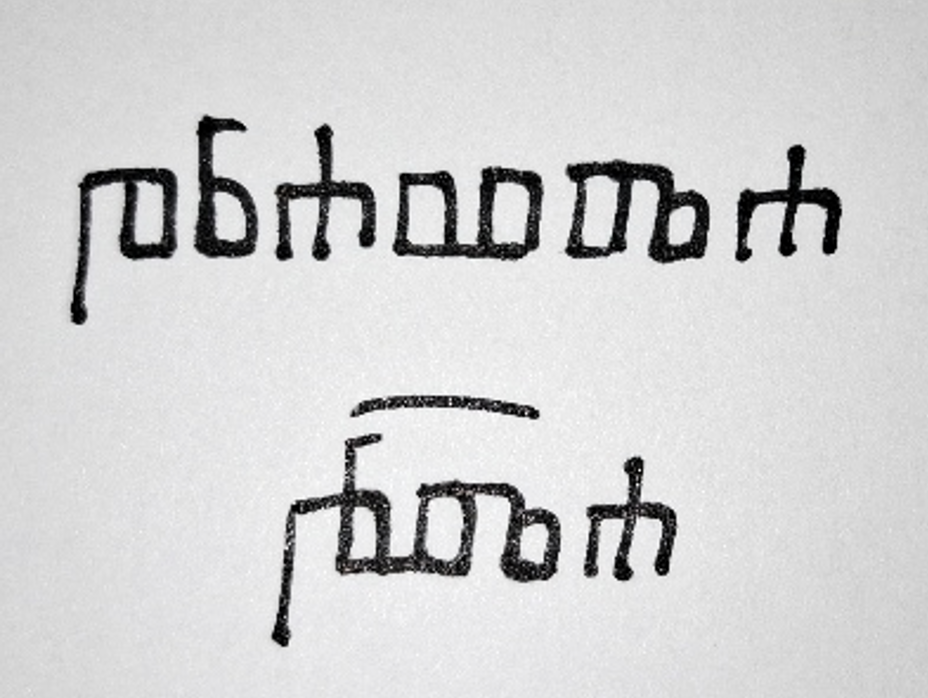
Image 1
The full spelling of the word pravda (above) and its ligature pr͡vda (below) in Glagolitic
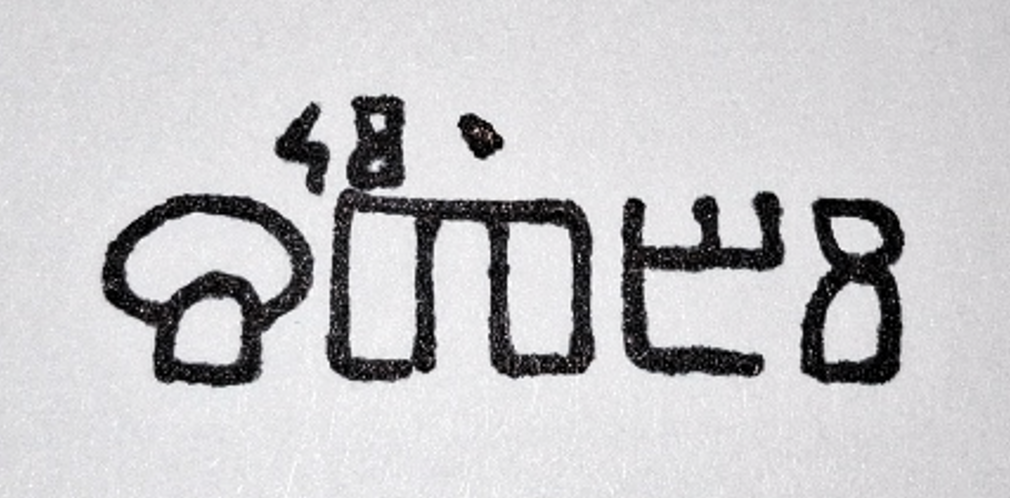
Image 2
The phrase skot’bi with ko and a Glagolitic apostrophe in the superscript

Image 3
One of the few obvious capitals, a V (Ⰲ) that is slightly larger and lighter in color, in the phrase Vsipopov/e (‘all priest/s’)
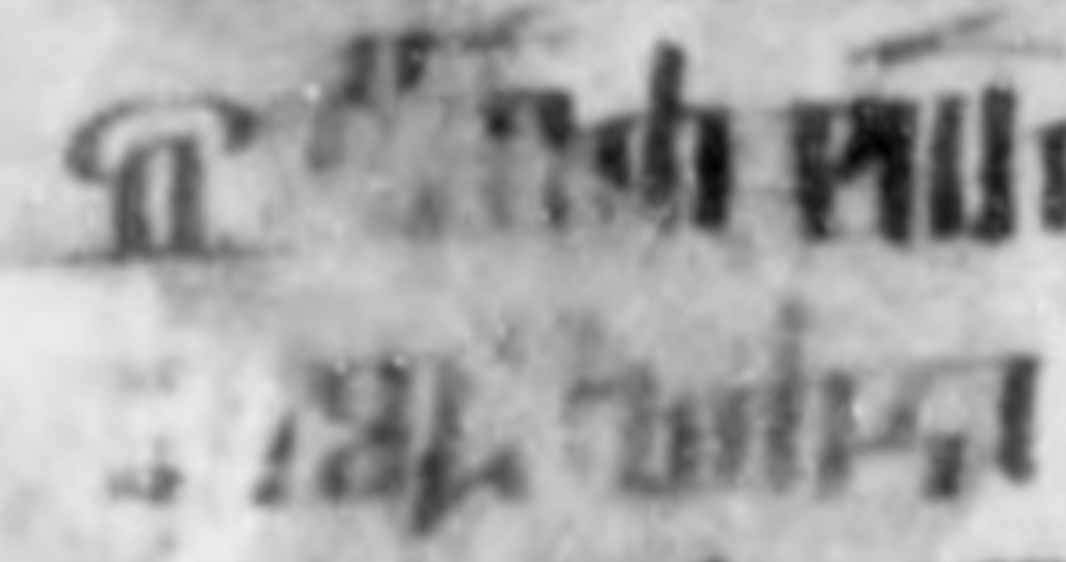
Image 4
A smudge in the manuscript, with the words Sl͡va (‘Glory’, above) and dohdakъ (‘wage’, below) partially erased
-
Bibliothèque nationale de France. Département des Manuscrits. Slave 11. Public Domain, https://gallica.bnf.fr/ark:/12148/btv1b10077285j
-
Demijan Vilupek is a graduate student of English and Scandinavian studies at the University of Zagreb, Croatia, specializing in translation. What he loves most about translating is the ability to bring physically or culturally distant literatures to new audiences, especially when they have historically had little or no contact.
He has translated works by Tishani Doshi, Henrik Pontoppidan, Alexander Kielland and Manuel Arguilla into Croatian, and is currently involved in a project to translate a short story by Maša Kolanović into English. He is also a volunteer translator for Cochrane Croatia and a contributor to the Danish National Lexicon.